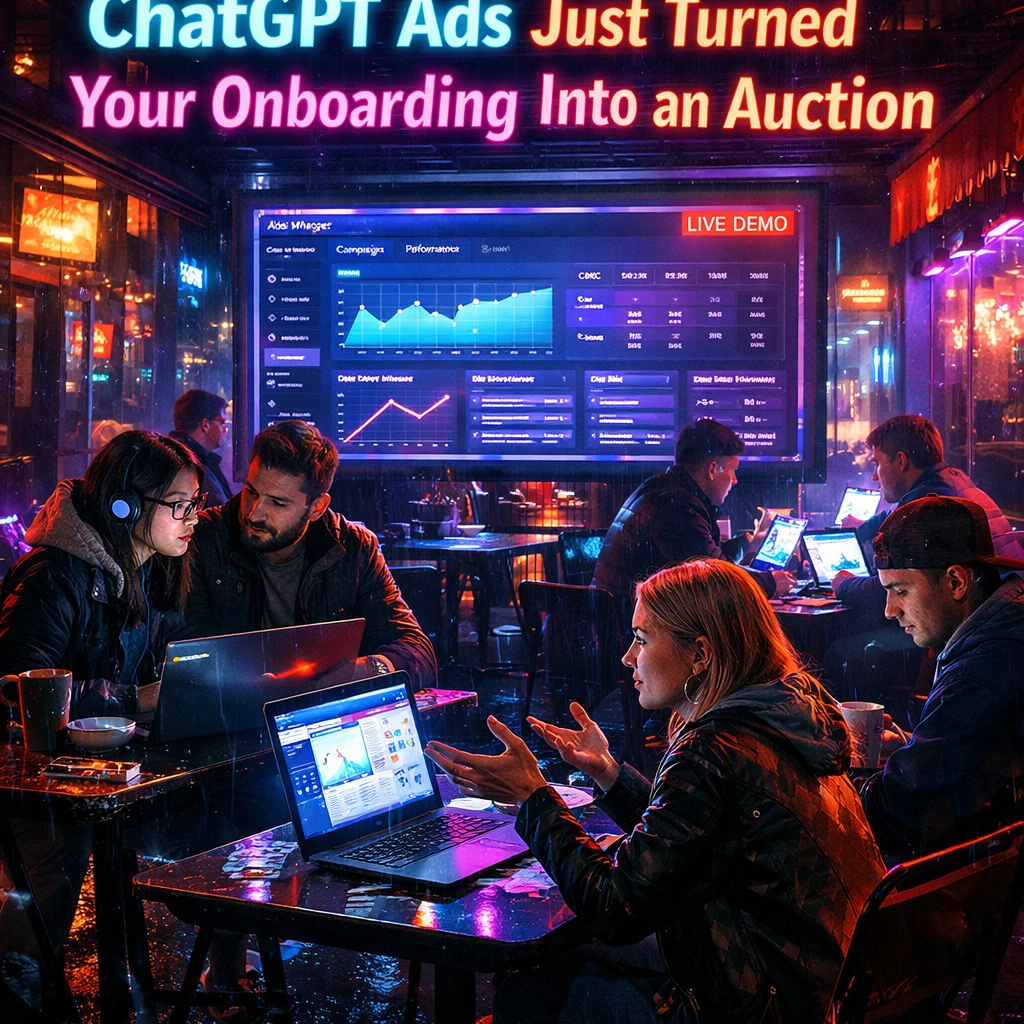

OpenAI has transformed ChatGPT into a performance marketing channel with the introduction of a beta Ads Manager for U.S. advertisers. This allows for contextual ad placements linked to user inquiries, moving discovery away from traditional browsing to direct interaction within the chat experience.
The shift requires AI startups to rethink their onboarding and product clarity. As users arrive with high intent from ChatGPT, converting leads hinges on delivering clear, immediate value rather than traditional marketing narratives. Founders are urged to create focused micro-funnels tailored to specific user queries to effectively compete in this evolving landscape.
OpenAI didn’t just “add ads” to ChatGPT. It turned the default interface for how millions of people ask questions into a performance marketing channel you don’t control. And if you’re an AI startup founder still designing for “organic discovery,” you just moved to the wrong side of the table.
In early May, OpenAI rolled out a beta self-serve Ads Manager for ChatGPT, letting U.S. advertisers sign up, create campaigns, set budgets, and run contextual ads directly inside the chat experience. On top of the earlier CPM-based tests, they’ve now added cost-per-click bidding, conversion tracking via pixel and Conversions API, and aggregated reporting on downstream actions like sign-ups and purchases. Eligibility is still limited to certain verticals and to U.S. advertisers for now, but the direction is obvious: anyone with a URL and a credit card will soon be able to inject themselves into high-intent conversations.
Crucially, these are contextual, intent-driven placements inside an answer engine, not banner ads stapled to a website. OpenAI says conversations themselves aren’t shared with advertisers, but matching is driven by the topics and queries users are already exploring in ChatGPT. This is search ads without the search results page — users ask, the model answers, and your product can quietly appear as the “do something about it” path if you’re willing to pay.
Why does this matter more to you than yet another ads product? Because discovery for AI products is already shifting from “visit my site, read my landing page, click around” to “ask the model, get an action, move on.” Google is turning Search into an agentic runtime; OpenAI is turning ChatGPT into a monetized answer engine with built-in intent. The funnel is collapsing into a single interaction — and your UX either plugs neatly into that, or you pay to be ignored.
Most founders will treat this like “another growth channel” and throw performance marketers at it. That’s a mistake. ChatGPT ads are not just about targeting; they’re about how your product behaves after the click. If a user asks “how do I turn my customer calls into structured insights” and lands on your wall-of-copy hero with vague value props, they will bounce — and you will pay for the privilege.
The hard truth: your landing page and onboarding now have to carry answer-engine-level clarity. The user is coming from a conversational context where they already got a synthesized explanation. They don’t need your story; they need the shortest possible path from intent to “this is working.” That means ruthless narrowing around one job-to-be-done, one proof of value, and one fast, observable win inside the product.
This also exposes every sloppy onboarding decision you’ve been punting. Friction that was “annoying but survivable” when traffic was free becomes unsustainable when each new visitor arrives via a paid, high-intent query. Unclear pricing, generic trial flows, dead-end empty states, and AI features buried three clicks deep are now direct tax on your CAC, not abstract UX debt.
For AI products specifically, there’s an extra layer: expectation calibration. Users arriving from ChatGPT already believe in AI. They don’t need to be convinced that “AI can help.” They need guardrails: what your model can actually do, how it behaves with their data, what levers they control, and what “good” looks like in 5 minutes, not 30 days. That’s UX, not copy.
Poplab’s whole stance is founder-first, metric-driven design for AI products — shipping UX that moves activation, conversion, and retention instead of decorating the funnel. This shift in ChatGPT just makes that philosophy non-optional: if you buy traffic into a vague, undisciplined funnel, the ad platform will happily keep charging you while your users quietly churn.
One concrete move you can make this week: design a ChatGPT-native acquisition path for a single, high-value use case. Pick one query pattern you want to win (for example, “summarize my sales calls into action items”), and build a dedicated micro-funnel around it: a tightly scoped landing page that mirrors the language of that intent, a signup that asks for the bare minimum inputs, and an onboarding flow that drives the user into one orchestrated “first win” inside 3–5 minutes. Instrument that path end-to-end — from ad click to in-product success state — and ignore everything else until those numbers are clean.
Because here’s the new reality: you’re not just competing with other startups for attention. You’re competing with the answer engine itself. If your product can’t turn a high-intent ChatGPT click into a fast, trusted outcome, you won’t just lose users — you’ll lose the right to keep bidding.

Leave a Reply