Category: Blog
-

Cognition Just Spent Nine Figures on a Personality. Most Product Teams Will Learn the Wrong Lesson
Cognition bought Poke in a low-nine-figure deal to give Devin a personality. The market now prices how a product talks to its users as a real asset. But most B2B SaaS teams will respond with jokes and emoji — and miss the actual lesson.
-
The SaaS Rout Is a Product Problem Dressed as a Market Problem
The Magnificent 7 lost $767 billion yesterday. Software now trades below the S&P 500 for the first time ever. Orlando Bravo says some SaaS companies deserve their valuation cuts. The market is not punishing bad business models. It is punishing products that stopped proving their own value.
-
You Are Measuring Activation Wrong — And It Is Costing You Paid Conversions
One B2B SaaS company reported 100 percent activation and 4 percent paid conversion during a SaaSrise mastermind last week. ChartMogul’s new conversion data confirms the pattern. The problem is not the product. It is the metric. Here is how to fix it.
-
The Metrics That Lie: Why Your Product Dashboard Is Giving You False Confidence
Most B2B SaaS teams track the wrong things and call it data-driven. Here are the metrics that look good in board meetings but hide the UX leaks that kill retention.
-
5 UX Leaks Nobody Checks (And Why Your Churn Report Won’t Find Them)
Most teams hunt for leaks in onboarding and checkout. The expensive ones live somewhere else. Here are 5 patterns I’ve seen kill retention at B2B SaaS products — and none of them show up in your analytics dashboard.
-
Nadella Just Told Your Enterprise Buyers What You Have Been Hoping They Would Not Notice
Microsoft’s CEO just gave your customers a master class in why proprietary model dependency is a procurement risk. Here is what to audit in your product this week.
-
Your Activation Rate Is Fine. Your Activation Flow Is Lying to You.
Your activation rate is a single number. But activation isn’t a single moment — it’s a chain of decisions. Break one link and the whole thing fails. Here’s how to find the break.
-
ChatGPT Is Becoming the Interface. Your Startup Should Stop Pretending Otherwise.
OpenAI’s move toward a ChatGPT superapp is not just another product update. It’s a warning shot for AI founders who still think “better features” will beat better control of the workflow.
-
The Real AI Moat Is Boring UX
AI startups are still losing because they design for demos, not decisions. The winners are the ones making agent behavior legible, controllable, and worth trusting.
-
Your Users Aren’t Complaining. They’re Just Leaving.
Six in ten signups never activate, and most never complain — they just vanish. Here’s why silent churn is a design failure, not a marketing one, and how to catch it before the revenue report does.
-
Nailing User Flows Isn’t UX Polish. It’s Revenue Engineering.
Every unmapped fork, confusing error state, and unnecessary click in your user flow is a conversion tax you’re paying daily. Here’s what 2026’s UX shifts demand—and how to audit your flows before you scale the problem.
-
When Regulators Blink, Your AI Product Can’t
The U.S. just turned the tap back on for frontier AI models. If your product’s only defense against risk is “hope the API stays up,” you’re playing compliance roulette, not building a company.
-
Fewer Agents, Better Products: Why the Real AI Startup Moat Is Workflow Design
The new edge in AI products is not piling on more agents. It is cutting away dumb workflow, shrinking decisions, and making the first value moment painfully obvious.
-
Microsoft Just Turned Your SaaS Into an Add-On
Microsoft’s new Copilot Cowork and Scout agents quietly turned Microsoft 365 into the default control surface for work. If you’re building AI SaaS and still designing like you own the workflow, you’re already behind.
-
AI Founders Don’t Need More Agents. They Need Fewer Dumb Workflows.
The next competitive edge in AI products is not “more autonomy.” It’s cleaner workflows, tighter context, and fewer places for users to get confused, billed, or abandoned.
-
If Your Product Dies When a Model Sneezes, You Don’t Have a Product
Anthropic’s Claude Sonnet 5 launch and export-control drama just handed founders a blunt lesson: if one model outage can wreck your UX, you’re not building a product—you’re hanging a UI on someone else’s infrastructure. Here’s what to fix this week.
-
Figma Config 2026 Just Raised the Bar Nobody Needed Raised
Figma’s Config 2026 introduces game-changing features like Code Layers, Figma Motion, and generative plugins that enhance design workflows and collaboration. However, founders are cautioned against losing focus on core user experience issues, such as optimizing onboarding processes. While these updates improve operational efficiency, they should not distract from the essential iterative development and user feedback…
-
Episodic Design Is Killing Your Product’s Compounding Growth
Most AI founders hire designers for sprints and wonder why their product never develops a coherent system, a consistent quality bar, or design decisions that compound over time. The sprint model is the right tool for the wrong problem. Here is what continuous embedded design actually unlocks — and when the retainer model becomes the…
-
Most AI Products Do Not Fail at Building. They Fail at Launching.
Founders spend months building the right product and two weeks preparing to launch it. Then they wonder why traction is slow. The launch is not a milestone you cross — it is a designed experience you build. Here is what a real 0-to-1 product launch requires, and why most AI startups skip the parts that…
-
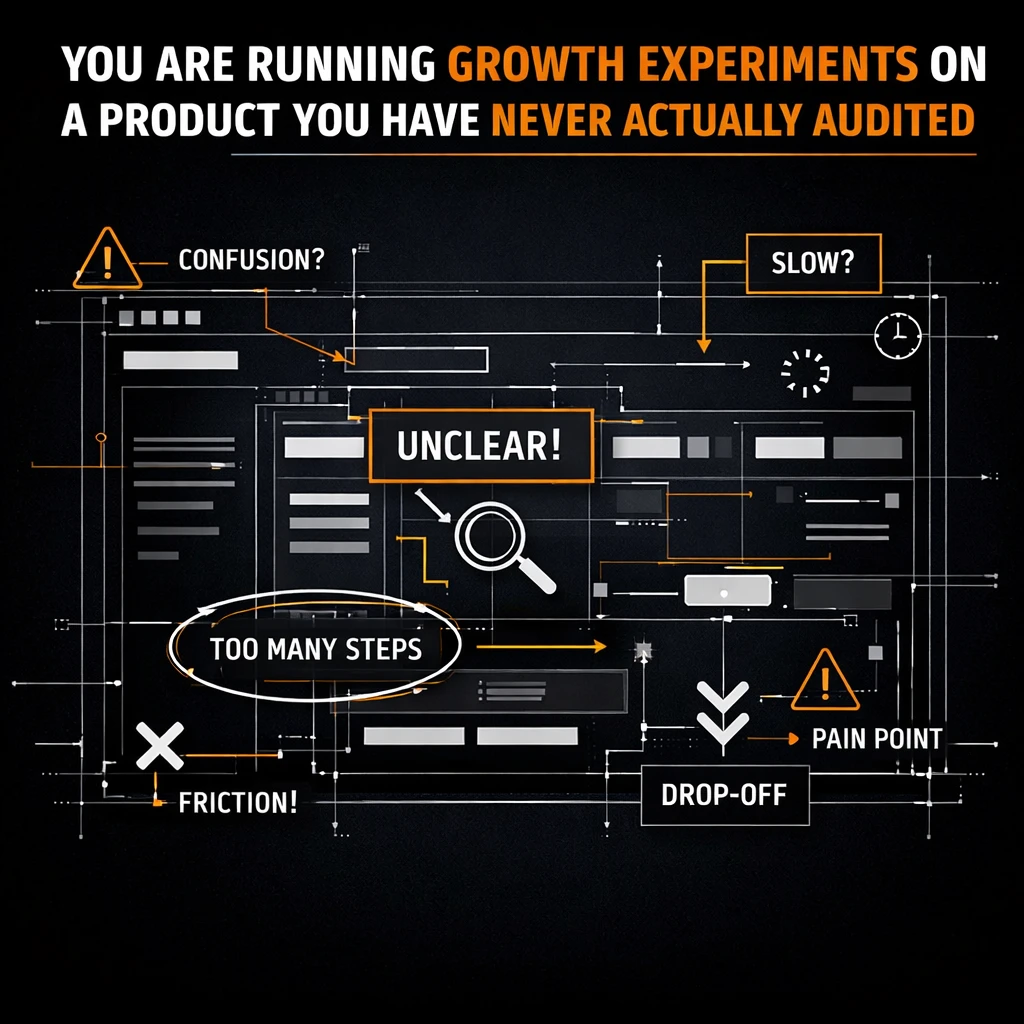
You Are Running Growth Experiments on a Product You Have Never Actually Audited
Most AI founders optimize for acquisition before they have any idea where their product is leaking. They run experiments on broken flows, iterate on underperforming features, and burn budget on traffic that hits friction they never diagnosed. A design audit fixes the foundation before you scale the problem.
-
A Landing Page That Does Not Convert Is Not a Marketing Problem. It Is a Design Problem.
Most AI startup landing pages look credible and perform terribly. The traffic is there. The product is real. But the page itself is doing active damage to conversion — and the founders running ads into it have no idea why. Here is what a conversion-optimized landing page actually requires.
-
Autonomy Theater Is the New Vaporware. Here’s How to Stop Building It.
Every week another founder demos an AI agent that looks like magic in a Loom and collapses on contact with a real user. Here’s what’s actually happening — and the design move that fixes it.
-
Your Brand Is Not Visual Polish. It Is the First Trust Decision Investors Make About You.
Pre-seed founders treat brand identity as something you do after you raise. Investors treat it as a signal of judgment before they commit. That timing gap is costing founders credibility at the exact moment it matters most.
-
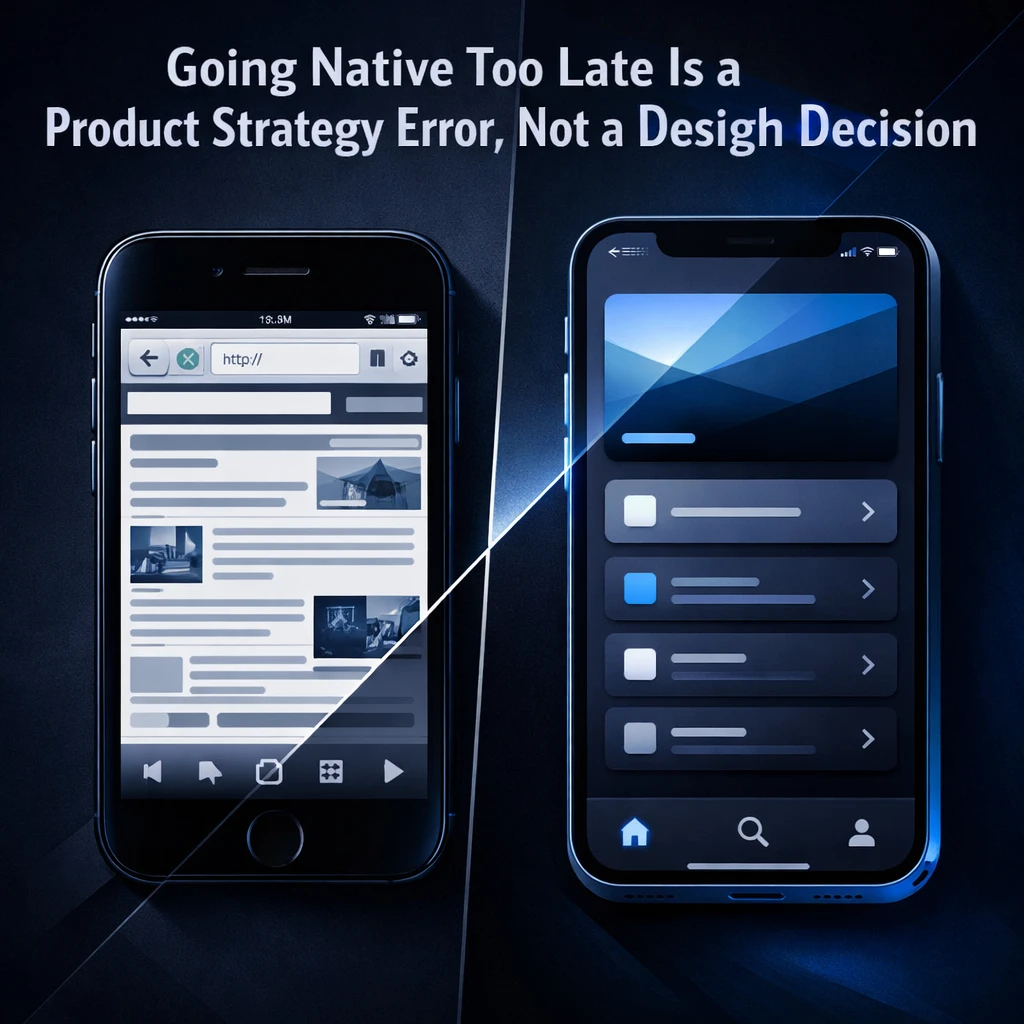
Going Native Too Late Is a Product Strategy Error, Not a Design Decision
Most AI startups delay native mobile because it feels expensive and premature. By the time they realize it was neither, they have already handed the mobile experience to competitors who moved first. Here is what the delay actually costs — and how to go native without a twelve-week commitment.
-
Figma Motion Just Gave Your Product ADHD
Figma Motion makes animation basically free. That’s the problem. If you don’t put hard guardrails on motion now, your AI product will ship as a theme park instead of a tool users can trust.
-
The Design System You Don’t Have Is Slowing Your Engineers Down
Most AI startups treat a design system as a luxury for later — something Series B companies do. That logic is costing them engineering cycles, product consistency, and credibility with the enterprise buyers who notice immediately. Here is why a design system is an infrastructure decision, not a design one.
-
Your B2B Dashboard Is Not Hard to Use. It Was Never Designed to Be Used.
Most B2B SaaS dashboards are built by engineers for engineers and handed to customers who expected a product. The gap between those two things is where churn lives. Here is what enterprise dashboard design actually requires — and why getting it wrong is a revenue problem, not a UX one.
-
Your Pitch Deck Is Not a Presentation. It Is a Design Problem.
Most AI founders treat their pitch deck as a content problem — just get the narrative right and the design will follow. That is exactly backwards. Here is why deck design is a conversion problem, and how to fix it before your next raise.
-
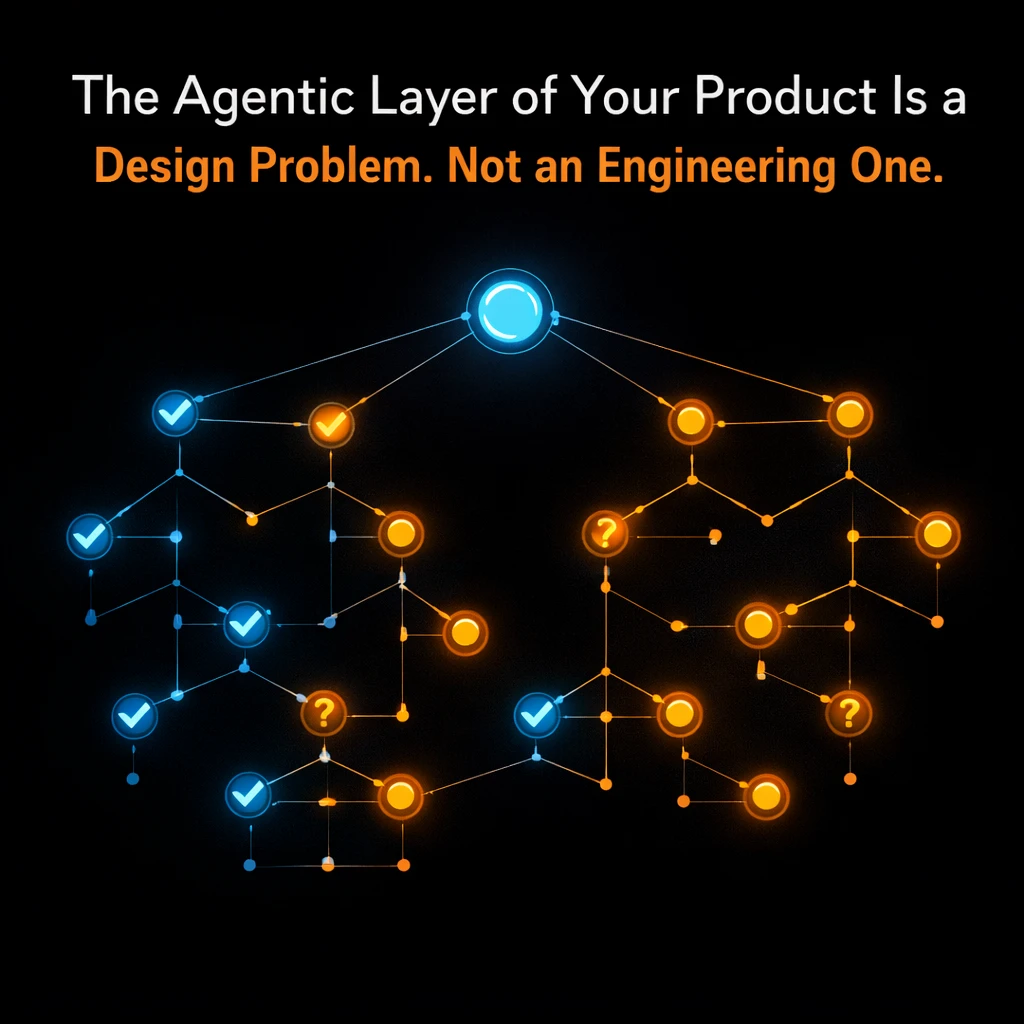
The Agentic Layer of Your Product Is a Design Problem. Not an Engineering One.
Every AI startup is racing to add agents. Almost none of them are designing for what happens when those agents act — and users have no idea why. Here is why agentic UX is the most underestimated product risk in 2026.
-
Your AI Product Onboards Like It Was Built in 2018. That’s Costing You Users.
Most AI startups lose their best users in the first session — not because the product is bad, but because the onboarding was never designed. Here’s why activation is the metric founders overlook until it’s expensive to fix.
-
When Figma’s AI Agent Goes Dark, Your Roadmap Shouldn’t
If a 90‑minute Figma AI outage can stall your team, your product isn’t “AI‑accelerated”—it’s brittle. Here’s why founders need design systems and fallback rails before the next agent crash.
-
The Jalapeño Moment: Your AI UX Now Has a Hardware Problem
OpenAI’s new Jalapeño chip isn’t just infra porn for chip nerds. It quietly turns latency, reliability, and cost into UX and product decisions you can’t dodge anymore.
-
Users Don’t Trust Your AI Product. That’s Now Your Primary Design Problem.
Consumer confidence in AI experiences is collapsing even as AI products proliferate at record speed. The Nielsen Norman Group just called it: trust is the defining UX problem of 2026. Here’s why founders need to treat trust as a design constraint — not a marketing message.
-
ChatGPT Just Became Your Competitor’s Distribution Channel. Design Accordingly.
OpenAI didn’t build an ad platform. It built a trust layer between your users and your product — and it’s now selling slots in it. Here’s what that means for how you design, position, and acquire.
-
Your Moat Is a UX Problem, Not a Model Problem
Investors in 2026 have one question before they take a first meeting: why can’t OpenAI ship this in two product cycles? Most founders are answering with tech. The right answer is product design.
-
Your AI Agent Has No ID. That’s a Product Problem, Not a Backend Ticket.
Arcade just raised $60M to solve AI agent authorization. Most founders are treating it as an engineering concern. That’s why their agents are getting killed in enterprise reviews — and why users don’t trust them.