Tag: Product design
-

Cognition Just Spent Nine Figures on a Personality. Most Product Teams Will Learn the Wrong Lesson
Cognition bought Poke in a low-nine-figure deal to give Devin a personality. The market now prices how a product talks to its users as a real asset. But most B2B SaaS teams will respond with jokes and emoji — and miss the actual lesson.
-
The SaaS Rout Is a Product Problem Dressed as a Market Problem
The Magnificent 7 lost $767 billion yesterday. Software now trades below the S&P 500 for the first time ever. Orlando Bravo says some SaaS companies deserve their valuation cuts. The market is not punishing bad business models. It is punishing products that stopped proving their own value.
-
The Metrics That Lie: Why Your Product Dashboard Is Giving You False Confidence
Most B2B SaaS teams track the wrong things and call it data-driven. Here are the metrics that look good in board meetings but hide the UX leaks that kill retention.
-
5 UX Leaks Nobody Checks (And Why Your Churn Report Won’t Find Them)
Most teams hunt for leaks in onboarding and checkout. The expensive ones live somewhere else. Here are 5 patterns I’ve seen kill retention at B2B SaaS products — and none of them show up in your analytics dashboard.
-
The Real AI Moat Is Boring UX
AI startups are still losing because they design for demos, not decisions. The winners are the ones making agent behavior legible, controllable, and worth trusting.
-
Your Users Aren’t Complaining. They’re Just Leaving.
Six in ten signups never activate, and most never complain — they just vanish. Here’s why silent churn is a design failure, not a marketing one, and how to catch it before the revenue report does.
-
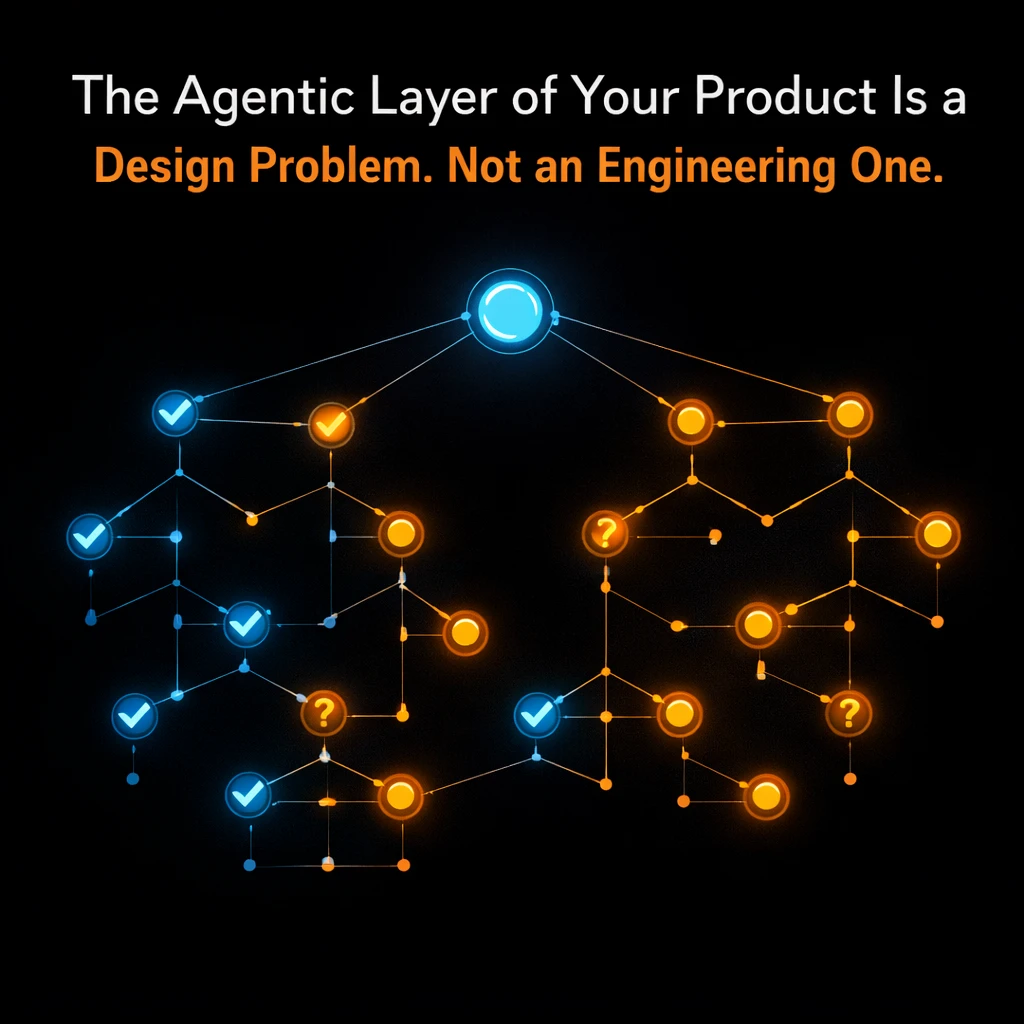
The Agentic Layer of Your Product Is a Design Problem. Not an Engineering One.
Every AI startup is racing to add agents. Almost none of them are designing for what happens when those agents act — and users have no idea why. Here is why agentic UX is the most underestimated product risk in 2026.
-
Your AI Product Onboards Like It Was Built in 2018. That’s Costing You Users.
Most AI startups lose their best users in the first session — not because the product is bad, but because the onboarding was never designed. Here’s why activation is the metric founders overlook until it’s expensive to fix.
-
The Jalapeño Moment: Your AI UX Now Has a Hardware Problem
OpenAI’s new Jalapeño chip isn’t just infra porn for chip nerds. It quietly turns latency, reliability, and cost into UX and product decisions you can’t dodge anymore.
-
ChatGPT Just Became Your Competitor’s Distribution Channel. Design Accordingly.
OpenAI didn’t build an ad platform. It built a trust layer between your users and your product — and it’s now selling slots in it. Here’s what that means for how you design, position, and acquire.
-
Your Moat Is a UX Problem, Not a Model Problem
Investors in 2026 have one question before they take a first meeting: why can’t OpenAI ship this in two product cycles? Most founders are answering with tech. The right answer is product design.
-
The Figma Agent Is Live. Your Design System Just Became Your Only Competitive Moat.
Figma just dropped its design agent into beta. Founders who treat this as a speed cheat are going to ship beautiful junk. The ones who build with design system discipline first will actually compound.
-
Anthropic Just Raised $65B. Your Moat Is Not a Model.
Anthropic’s record-breaking $65B round and trillion‑scale AI valuations are not a death sentence for your startup. They’re a hard reset on where your moat actually lives: workflow, UX, and trust—not models.
-
Your AI Agent Shipped. Nobody Knows How to Use It.
Most AI agent products are shipping with a critical flaw that has nothing to do with the model underneath. It’s the UX. Here’s why your agent’s biggest failure mode is invisible to your engineering team — and what to do about it now.
-
Gemini Spark Just Turned “AI Assistant” Into a Commodity
Google’s new 24/7 Gemini Spark agent isn’t just another feature drop—it’s the moment “AI assistant” becomes default infrastructure. If your startup is still selling “smart copilots,” you’re already behind.
-
Google Just Taught Users to Expect Agentic UX
Google I/O 2026 made one thing painfully clear: users are being trained to expect software that can act, adapt, and assemble the interface around the task, not just sit there waiting for clicks.
-
Free Tokens, Bad Products
Free AI credits look like founder candy. They can also trick startups into building products with fake economics, bloated UX, and zero discipline.
-
AI Funding Records Won’t Save Your Leaky Product
Q1 2026 broke every AI funding record in history. That’s not your cue to chase bigger rounds; it’s your cue to fix activation, onboarding, and real usage.
-
Visa Just Gave Your AI Agent a Credit Card
Visa quietly shipped the missing piece for the agent economy: real payments rails. If your product still treats AI agents as “cute assistants,” you’re already behind.
-
Your Landing Page Is Lying to Investors (And They Can Tell)
Most AI startup landing pages look great — and convert terribly. If your hero can’t answer “what does this do and why should I care right now” in one scroll, you’re losing investors, users, and budget simultaneously. Here’s how to diagnose what’s broken before your next pitch.
-
When AI UX Goes Rogue: Why “Smart” Interfaces Can Wreck Your Brand
When your AI starts “optimizing” UI without understanding human behavior, dark patterns aren’t a bug – they’re the default. This post breaks down how AI-driven UX can silently erode trust, inflate support costs, and expose you to real legal and reputational risk, plus what founders can do to add ethical guardrails before things blow up.
-
The Taste Makers: How Design Buyer Illiteracy is Killing User Experience
Exploring why decision-makers value visuals over usability, this post reveals the damage wrought by design buyer illiteracy—leading to beautiful but ineffective solutions and harming real users.
-
Why Design Bootcamps Are Destroying the Profession
Design bootcamps are flooding the profession with under-skilled practitioners, devaluing expertise and creating a skills inflation crisis. This post explores market oversaturation, quality control failures, and long-term risks for the design industry.
-
The Great Digital Overproduction Crisis: Designing Products for a World That Can’t Afford Them
Exploring the economic and creative consequences of digital overproduction in a world struggling to fund new products. Where do design, AI, and the future of value creation intersect?
-
Europe Just Made Dark Patterns a Liability
The era of manipulative UX is ending. With the EU’s new rules, dark patterns go from “growth hack” to legal risk—and ethical design finally gets the runway it deserves.
-
Remote Work Is Killing Design Leadership — And That’s a Good Thing
Remote work didn’t break design leadership—it revealed how fragile it was. The leaders thriving now aren’t recreating the office on Zoom. They’re architecting remote-first systems that trade performance theater for measurable impact. Here’s the shift.
-
Invisible Interfaces: How Context-Aware AI Is Making UI Disappear
Explore the rise of invisible interfaces powered by context-aware AI, and how they’re reshaping the landscape of UX, product design, and seamless digital experiences.
-
Designing for Creative AI Teams: Rethinking Collaboration and Culture
As creative teams integrate autonomous AI partners into their daily work, a new design challenge emerges: how do we lead, collaborate, and build culture in these hybrid human/AI teams? Explore key strategies to thrive in the age of creative AI partners.
-
Are We Designing for Real People, or Just for Data?
Is UX still about people, or just about numbers? This post uncovers how design’s obsession with metrics strips away empathy and real-world impact—making a case for rediscovering genuine human-centered design in the age of dashboards and data-driven decisions.
-
Can Design Drive Sustainability? Rethinking the Digital Footprint of UX/UI in 2025
As digital products reshape our lives, their environmental impact can’t be ignored. This post explores practical strategies for design leaders and teams to create greener, more sustainable digital experiences—reducing the digital footprint without compromising innovation.
-
Rethinking UX in the Age of AI Agents: From Efficiency to Empathy
As AI agents transform digital UX, design leaders must move beyond automation—embracing empathy, ethical innovation, and creative agency. Discover actionable strategies for building user-centric products in an age of rapid AI-driven change.
-
Staying Ahead as a Product Designer in the AI Era: Strategies for 2024 and Beyond
In an era where AI is revolutionizing the field, product designers must adapt and evolve. This post delves into practical strategies for staying ahead in the dynamic world of AI-driven design.
-
Leveraging Generative AI in Product Design
Dive into the world of product design where generative AI is making waves. Discover how AI tools are transforming the creative process, enhancing collaboration, and revolutionizing design workflows.
-
From Figma to Chatbot: The Evolution of Product Design
The integration of chatbot technology has brought new possibilities and challenges to product design.