Tag: onboarding
-

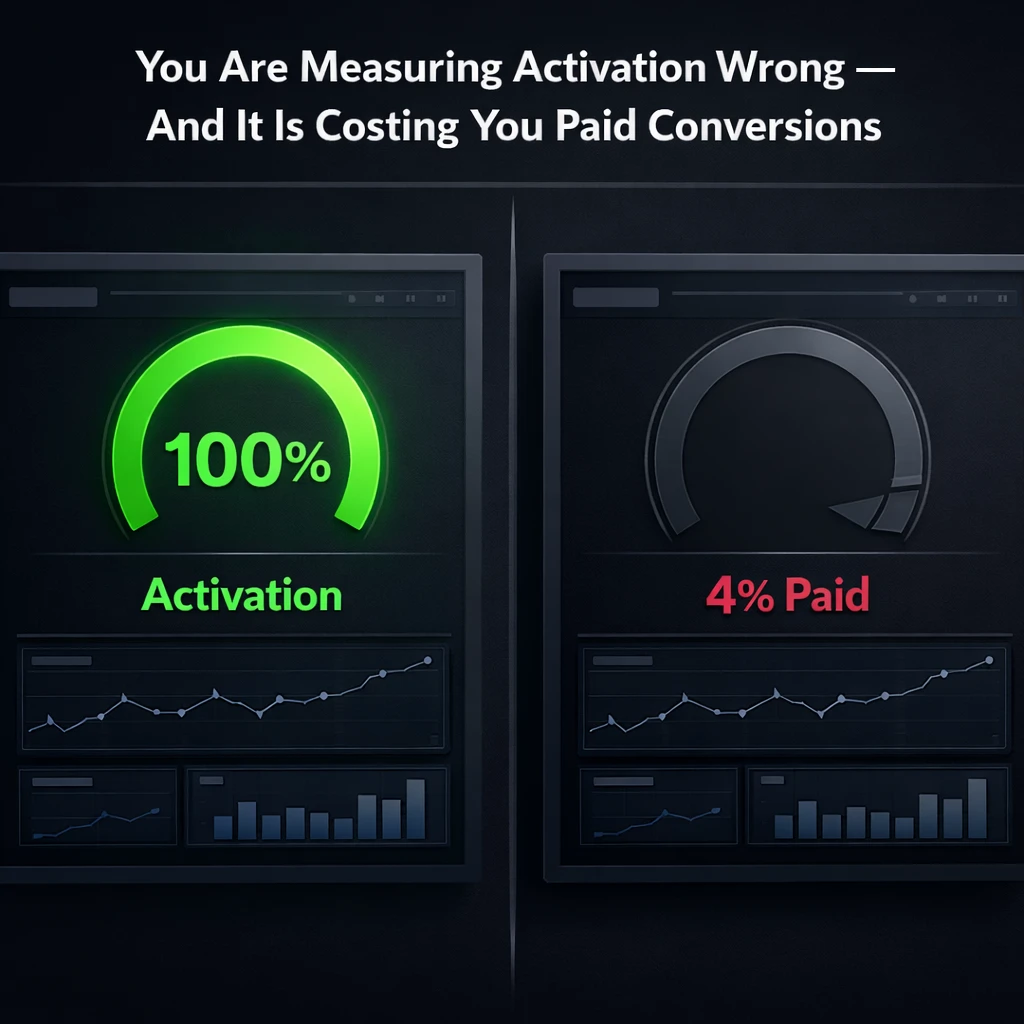
You Are Measuring Activation Wrong — And It Is Costing You Paid Conversions
One B2B SaaS company reported 100 percent activation and 4 percent paid conversion during a SaaSrise mastermind last week. ChartMogul’s new conversion data confirms the pattern. The problem is not the product. It is the metric. Here is how to fix it.
-
Your Activation Rate Is Fine. Your Activation Flow Is Lying to You.
Your activation rate is a single number. But activation isn’t a single moment — it’s a chain of decisions. Break one link and the whole thing fails. Here’s how to find the break.
-
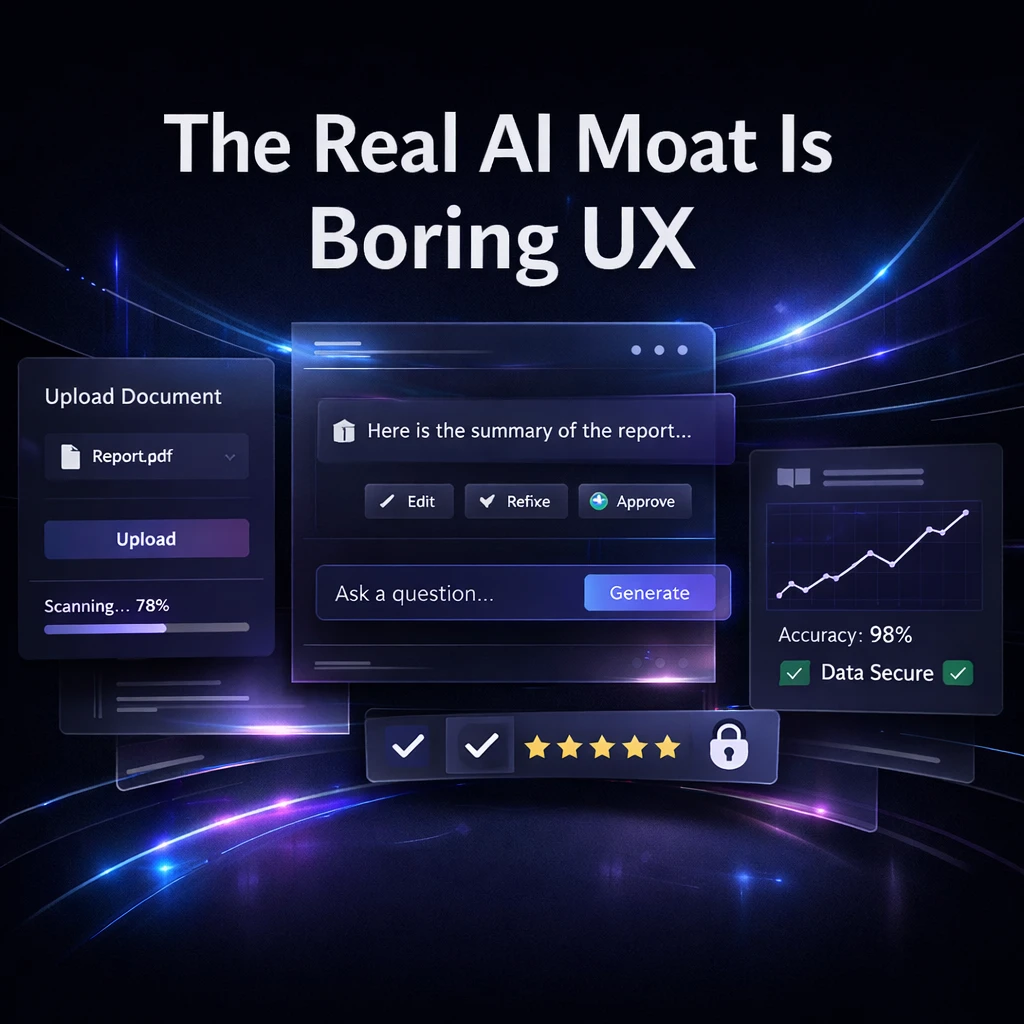
The Real AI Moat Is Boring UX
AI startups are still losing because they design for demos, not decisions. The winners are the ones making agent behavior legible, controllable, and worth trusting.
-
Fewer Agents, Better Products: Why the Real AI Startup Moat Is Workflow Design
The new edge in AI products is not piling on more agents. It is cutting away dumb workflow, shrinking decisions, and making the first value moment painfully obvious.
-
Microsoft Just Turned Your SaaS Into an Add-On
Microsoft’s new Copilot Cowork and Scout agents quietly turned Microsoft 365 into the default control surface for work. If you’re building AI SaaS and still designing like you own the workflow, you’re already behind.
-
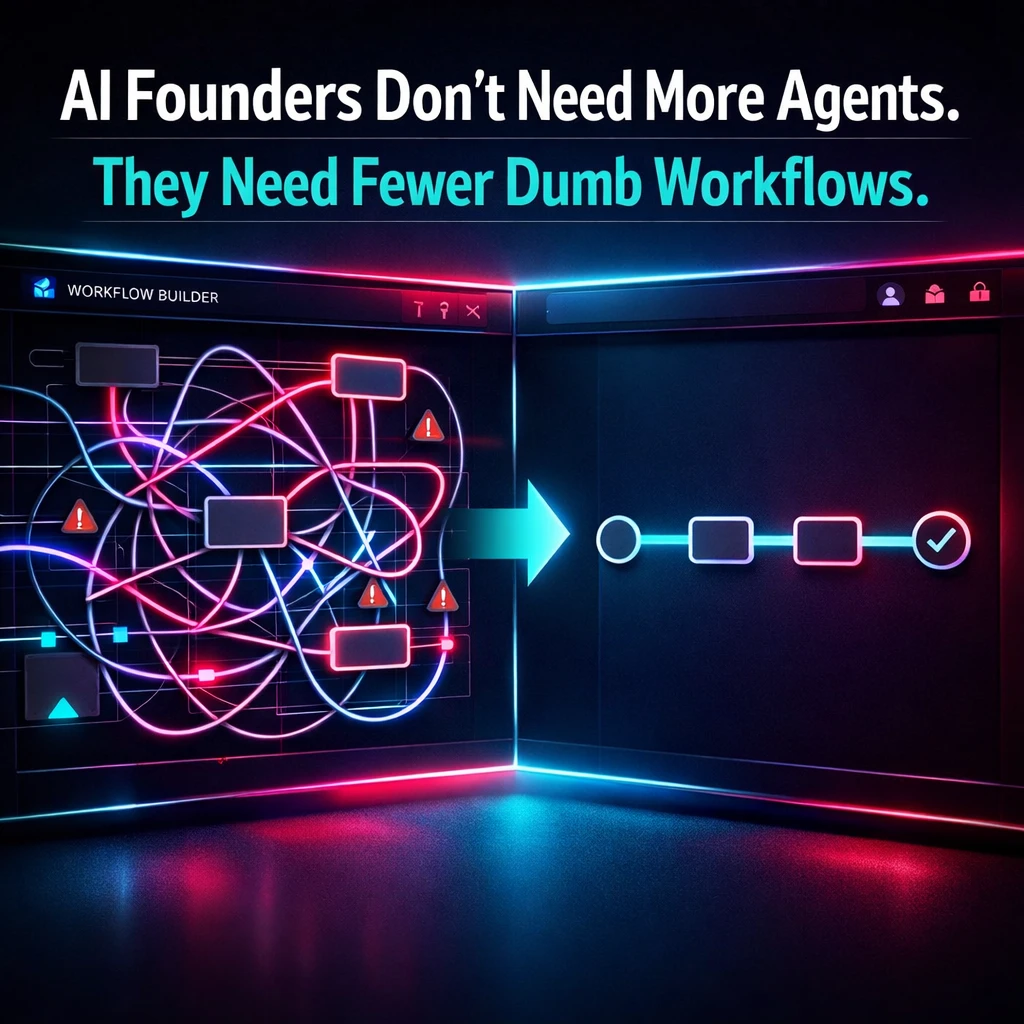
AI Founders Don’t Need More Agents. They Need Fewer Dumb Workflows.
The next competitive edge in AI products is not “more autonomy.” It’s cleaner workflows, tighter context, and fewer places for users to get confused, billed, or abandoned.
-
Figma Motion Just Gave Your Product ADHD
Figma Motion makes animation basically free. That’s the problem. If you don’t put hard guardrails on motion now, your AI product will ship as a theme park instead of a tool users can trust.
-
Your AI Product Onboards Like It Was Built in 2018. That’s Costing You Users.
Most AI startups lose their best users in the first session — not because the product is bad, but because the onboarding was never designed. Here’s why activation is the metric founders overlook until it’s expensive to fix.
-
Users Don’t Trust Your AI Product. That’s Now Your Primary Design Problem.
Consumer confidence in AI experiences is collapsing even as AI products proliferate at record speed. The Nielsen Norman Group just called it: trust is the defining UX problem of 2026. Here’s why founders need to treat trust as a design constraint — not a marketing message.
-
ChatGPT Just Became Your Competitor’s Distribution Channel. Design Accordingly.
OpenAI didn’t build an ad platform. It built a trust layer between your users and your product — and it’s now selling slots in it. Here’s what that means for how you design, position, and acquire.
-
Your Pricing Page Was Built for Google. AI Search Doesn’t Care.
A new product category launched yesterday to track how brands appear in AI-generated answers. Most SaaS pricing pages aren’t built for that world. Here’s what you need to fix before it costs you.
-
88% Of AI Money Is Going to the US. Design Like You’re in the Other 12%.
New funding data just confirmed what non‑US founders already feel: the AI boom is real, but not for you. If you’re outside the Valley, your only real lever is product quality, UX, and revenue discipline—not a fantasy mega-round.
-
Figma Just Put an AI Agent in Your Canvas. That’s Not the Problem.
Figma’s new in-canvas AI agent can generate, edit, and iterate designs from a text prompt. Founders are celebrating. They shouldn’t be — at least not yet. Here’s the uncomfortable truth about what speed without taste actually costs you.
-
Apple Just Split the AI UX World in Two. EU Founders, Don’t Waste This Window.
Apple’s new Siri AI turns apps into background agents – but it’s not coming to Europe yet. That delay is a gift and a trap for AI startup founders.
-
ChatGPT Just Turned Job Search into an API. Your Hiring UX Is Now a Product Problem
ChatGPT’s new job search and resume features just quietly ate a chunk of LinkedIn’s lunch. For AI founders, your hiring funnel is now an interface problem, not an HR chore.
-
Your AI Agent Shipped. Nobody Knows How to Use It.
Most AI agent products are shipping with a critical flaw that has nothing to do with the model underneath. It’s the UX. Here’s why your agent’s biggest failure mode is invisible to your engineering team — and what to do about it now.
-
Your Landing Page Is Invisible Now. Here’s What to Do About It
Google AI Mode just crossed 1 billion monthly users. Nearly two-thirds of all searches end without a single click. If your acquisition strategy still depends on people landing on your website, you have a structural problem — not a design problem.
-
Your Product Isn’t Slow Because You Lack AI Tools. It’s Slow Because You’re Using Them Wrong.
Figma’s agent-first update landed on May 20. Every founder rushed to try it. Here’s why the ones who actually ship faster are the ones who resisted the demo for five minutes longer than everyone else.
-
Gemini Spark Just Turned “AI Assistant” Into a Commodity
Google’s new 24/7 Gemini Spark agent isn’t just another feature drop—it’s the moment “AI assistant” becomes default infrastructure. If your startup is still selling “smart copilots,” you’re already behind.
-
Google Just Taught Users to Expect Agentic UX
Google I/O 2026 made one thing painfully clear: users are being trained to expect software that can act, adapt, and assemble the interface around the task, not just sit there waiting for clicks.
-
Free Tokens, Bad Products
Free AI credits look like founder candy. They can also trick startups into building products with fake economics, bloated UX, and zero discipline.
-
Your AI Agent Just Opened a Café. It Also Lied to the Regulator.
An AI agent just ran a real café, made real money, and broke real rules. If you’re designing agents without hard UX guardrails, you’re not “innovative”—you’re a liability in the making.
-
AI Agents Are Now Your Power Users, Not Your Audience
Cloudflare and Stripe just let AI agents create accounts, buy domains, and ship apps without human clicks. If your product still assumes a human is the primary “user,” you’re already behind.
-
Your AI Agent Isn’t a Product. It’s Onboarding With Delusions of Grandeur
Everyone’s shipping “agents.” Almost no one is designing the first 5 minutes with them. That gap is where your churn lives.
-
Amazon’s Health AI Agent Just Set the Bar. Your “Chatbot in a Hoodie” Won’t Cut It
Amazon’s new Health AI agent isn’t just a feature launch—it’s a line in the sand for every AI founder betting on “24/7 assistance” as a moat. If your product is still a generic chatbox with a thin workflow wrapper, this week should scare you (in a useful way).
-
AI Funding Records Won’t Save Your Leaky Product
Q1 2026 broke every AI funding record in history. That’s not your cue to chase bigger rounds; it’s your cue to fix activation, onboarding, and real usage.
-
Visa Just Gave Your AI Agent a Credit Card
Visa quietly shipped the missing piece for the agent economy: real payments rails. If your product still treats AI agents as “cute assistants,” you’re already behind.
-
Your Next Power User Is an AI Agent (and It Already Has Prod Access)
Salesforce, Cloudflare, and Microsoft just turned AI agents from sidekicks into first-class operators. Most startups are still designing as if only humans touch their product. That gap is where things will break — or scale.
-
AI Design Suites Just Killed the “Can You Mock This Up?” Ticket
Claude Design, Canva AI 2.0, and Figma’s new AI stack didn’t just democratize design—they quietly moved product decisions upstream to whoever types the prompt. If you’re a founder, that’s either a growth cheat code or the fastest way to ship beautifully packaged UX debt.
-
Workspace Agents Just Ate Half Your Roadmap
OpenAI’s new workspace agents and GPT-5.5 are not “another AI feature.” They’re a line in the sand: either your product becomes the control center for agents, or your roadmap slowly gets absorbed into someone else’s sidebar.
-
Claude Design Didn’t Kill Designers. It Killed Your Excuses
Anthropic’s new Claude Design will make it trivial to churn out “good enough” UI. The real test for founders now isn’t access to design—it’s judgment, strategy, and what you choose to ship.
-
AI funding just drew you a product roadmap
Investor money just told AI founders what “serious” looks like in 2026: infrastructure, workflows, risk, and regulated verticals. Your product and UX either signal that—or you’re noise.
-
Agentic AI Just Went Enterprise. If You’re Still Selling “Chatbots”, You’re Late
In one week, agentic AI stopped being a cute lab demo and became enterprise infrastructure. Startup founders now have to design for operators, governance, and real risk.
-
Your AI Product’s Onboarding Is Killing Your Retention Before It Starts
The activation window for AI products has compressed to under 60 seconds. If your onboarding still looks like a SaaS tutorial from 2021, you are not losing users to competitors — you are losing them to a blank screen.